

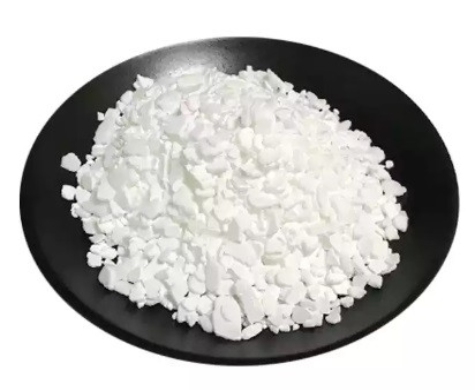

Appearence : | White Flake |
CAS No : | 10035-04-8 |
Food E Number : | E509 |
Molecular Formula : | CaCl₂.2H₂O |
Chemical Name : | Calcium chloride dihydrate |
Purity : | % 99 |
Density : | 1,85 g/cm³ |
CaCl₂ Content : | % 74-77 |
Calcium (Ca) Content : | % 28 |
Chlorine (CI) Content : | % 50 |
Melting Point : | 176 °C |
Boiling Point : | 1600 °C |
Water Solubility : | 134.5 g/100 mL (60 °C), 152.4 g/100 mL (100 °C) |
Storage Condition : | It should be stored in a cool, ventilated and moisture-free environment in closed packaging away from oxidizing substances. It is a hygroscopic substance. |
Solubility : | Soluble in water, alcohol, acetic acid and acetone. |
What is Calcium Chloride?
Calcium chloride, whose chemical formula is CaCl₂ and known as a salt, is usually white, crystalline. It is easily soluble in water and has hygroscopic (moisture-attracting) properties. Widely used in industrial and commercial applications, calcium chloride plays an important role in both agriculture and the food sector. Thanks to its high solubility and moisture absorption capacity, it has become a particularly preferred substance.
Calcium chloride was first produced on an industrial scale in the 19th century and started to be used in various fields. It has become widespread, especially as a de-icer on highways, due to its ability to lower the freezing point of water. Its use as a soil conditioner in agriculture and stabiliser in the food industry has also increased over time. Today, it is used in many different areas such as moisture control, construction materials and water treatment.
Chemical Properties of Calcium Chloride
The chemical formula of calcium chloride is CaCl₂ and its molecular weight is approximately 110.98 g/mol. The formula is formed by bonding one calcium atom with two chlorine atoms. The compound is effectively used in various industrial processes due to its chemical stability and reactivity.
Physically, calcium chloride is a white coloured and crystalline compound. It shows a very high solubility in water and its solubility increases as the temperature increases. Since it is a hygroscopic substance, it absorbs moisture from the environment. With this feature, it can be used in applications where humidity control is required. This feature is an important point to be considered during storage and transport.
Calcium chloride dissolves rapidly in water and gives the solution a slightly alkaline characteristic. pH value usually varies between 7 and 9. This is used in agricultural applications to regulate the pH level of the soil and to support plant growth. It is also preferred for stabilisation and moisture control in the food industry.
Usage Areas of Calcium Chloride
Calcium chloride, used as drip fertiliser in agriculture, provides calcium to plants quickly. Especially in plants sensitive to calcium deficiency, productivity is increased by soil and foliar applications. When applied as a solution, calcium chloride is rapidly absorbed by plant roots and improves nutrient balance.
Agriculture
It provides benefits such as strengthening the cell wall structure in plants and preventing fruit cracking. It also increases resistance to plant diseases and improves product quality. Especially in crops such as tomatoes, apples and lettuce, the use of calcium chloride plays a critical role in both yield and crop durability.
Storage
Calcium chloride is used effectively in dehumidification systems thanks to its hygroscopic structure. It is preferred as a dehumidifier to reduce humidity in storage areas. At the same time, environmental pollution is reduced by applying calcium chloride solution for dust control on roads and mine sites.
Construction
In the construction industry, it is used as an additive to increase the strength of concrete and to increase resistance to freeze-thaw cycles. In the chemical industry, it plays an important role as a reaction accelerator and auxiliary substance in water treatment processes. Calcium chloride is used in dairy products, especially in cheese making, to support the coagulation of milk proteins. It contributes to obtaining higher quality and durable products by providing calcium balance in the cheese production process.
Food
In the food industry, calcium chloride is used as a preservative to extend the shelf life of fruits and vegetables. It also acts as pH regulator in beverages and thickener in foods. These properties enable calcium chloride to have a wide range of applications in food production.
Benefits and Disadvantages of Calcium Chloride
Calcium chloride, which strengthens the cell wall structure in plants, is an important compound that improves fruit quality. It regulates the nutrient balance and increases soil fertility by using as drip fertiliser in plants sensitive to calcium deficiency. By balancing the pH level of the soil, it facilitates the nutrient uptake of plants and increases product yield. It is an effective solution to prevent cracking problems especially in crops such as tomatoes, apples and lettuce.
Thanks to its hygroscopic structure, calcium chloride is effectively used in applications where moisture control is required. Its use as a dehumidifier in storage areas prevents spoilage of products. The compound, which is also frequently preferred in dust control and de-icing applications, offers an environmentally friendly and economical solution. In the construction industry, it increases the resistance of concrete against freeze-thaw cycles, while in the chemical industry it functions as a reaction accelerator.
In case of improper or excessive use, calcium chloride can disrupt the mineral balance of the soil and lead to salt accumulation. This can cause burns on plant roots and growth problems. It can also cause irritation and affect the respiratory tract when in contact with human skin at high concentrations. During storage, due to its hygroscopic structure, it is important to store it in dry and cool environments as it carries the risk of massification by absorbing moisture from the air. In order to prevent these effects, attention should be paid to correct dosage and appropriate application methods.
Is Calcium Chloride Harmful?
Although calcium chloride is generally considered a safe compound, it may carry some risks to human health when used in high concentrations. Direct contact with the skin may cause irritation, itching or redness, especially on sensitive skin. Prolonged contact with the respiratory tract may cause irritation. If swallowed, stomach upset and nausea may occur. It is therefore important to use the necessary protective equipment when handling calcium chloride.
It is recommended to use protective equipment such as protective gloves, goggles and masks for the safe handling of calcium chloride. It should be stored in airtight containers and dry environments to protect it from moisture during storage. Correct dosage instructions should be followed during application and direct contact with food should be avoided. It is of great importance to keep it out of the reach of children, especially in domestic use.
Calcium chloride has the potential to harm the environment. It can cause changes in the water ecosystem, especially when it is uncontrolledly mixed into water resources. However, when used correctly, its environmental effects can be minimised. Thanks to its hygroscopic structure, it can be recycled and reused in humidity control or other applications. This contributes to more efficient use of resources by enabling the creation of an environmentally friendly utilisation cycle.
Storage and Purchase of Calcium Chloride
Calcium chloride has moisture-attracting properties due to its hygroscopic structure. Therefore, it is important to store it in dry, cool and airtight containers. Storage in humid environments may cause the product to clump and reduce its effectiveness. Keeping the product away from sunlight during storage also prolongs its shelf life. When stored under the right conditions, it can be used safely by preserving its chemical properties for a long time.
Calcium Chloride and Obafer Assurance
When purchasing calcium chloride, it is of great importance to check whether the product complies with quality standards. Certified products from reliable suppliers provide advantages in terms of both efficiency and safety. In wholesale purchases, technical support, analysis reports and competitive prices offered by the supplier should be taken into consideration. Determining the form of calcium chloride suitable for your area of use is also a critical part of the process.
As Obafer, we offer calcium chloride and other chemical products with superior quality standards with wholesale advantages. If you are looking for a reliable business partner with customised solutions and competitive prices, contact us now!


