

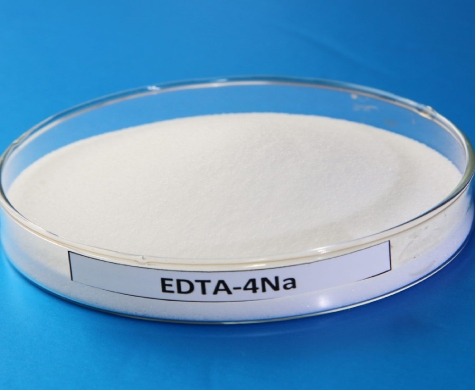

Appearance: | Beyaz Kristal Toz |
CAS No: | 13235-36-4 |
Molecular Formula: | C10H16N2O8.4H2O.4Na |
Chemical Name: | Ethylenediaminetetraacetic acid, tetrasodium salt, tetrahydrate |
Content: | %99,5 |
Solubility: | 500 g/l ( 20 °C) |
Chelate Value (mg CaCo3/g): | 215 -220 min |
pH (%1 solution): | 10,5-11,5 |
What is EDTA 4Na?
EDTA 4Na (Ethylenediamine Tetraacetic Acid Tetrasodium Salt) is a strong complexing agent that forms chelates by binding metal ions. Thanks to its chemical structure, it is widely used especially to soften hard water, control reactions by binding metal ions and provide stabilisation in various industrial processes. Since EDTA 4Na is in the form of sodium salt, it shows high solubility in water and keeps the pH at neutral or slightly alkaline levels.
The compound is a preferred chelating agent in industrial and laboratory environments. It is widely used in many areas from agriculture to textiles, from food processing to pharmaceuticals. Thanks to its high solubility and stability, it is easily soluble in water-based formulations and prevents unwanted reactions by eliminating the effect of free metal ions in the system.
Chemical Properties of EDTA
The chemical formula of EDTA 4Na is C₁₀H₁₂N₂O₈Na₄ with a molecular weight of approximately 380.17 g/mol. The four sodium ions in its formula increase the solubility of the EDTA molecule, allowing it to react more easily with metal ions. The chemical structure is an important feature that supports the wide range of uses of EDTA 4Na.
EDTA 4Na has a weak acid structure, but in its sodium salt form it exists at a neutral or slightly basic pH level. In solution, the pH usually ranges between 8-11. This increases the stability of EDTA. The pH level can affect its capacity to bind metal ions. For example, it becomes more active against some metal ions at lower pH levels, while its activity may decrease at higher pH levels.
EDTA 4Na, which has a very high solubility in water, dissolves rapidly to form a clear solution. The compound, which is physically in the form of white crystalline powder, does not show hygroscopic properties and remains stable even in humid environments. Its stability in water-based solutions facilitates its use in agricultural and industrial applications.
Usage Areas of EDTA
EDTA is one of the compounds used in many sectors: Its use in industry is as follows:
- In water treatment plants, it is used to remove the hardness of water and prevent calcification in pipes.
- In the textile industry, it is preferred to ensure more even and permanent adhesion of dyes.
- In the paper industry, it improves product quality by helping to soften fibres.
- In metal plating processes, it is used to ensure smooth surfaces and prevent oxidation.
EDTA 4na applicationsin agriculture are as follows:
- It enables plants to take micronutrients such as iron, zinc and magnesium more effectively.
- It helps plants to absorb nutrients faster by using in chelated fertiliser form.
- Supports efficient operation of drip irrigation systems by preventing mineral accumulation in pipelines.
- Provides more effective and long-lasting benefits by increasing the effectiveness of pesticide formulations.
EDTA is an important compound with a wide range of usesin the food, cosmetics and cleaning sectors. It is widely used in the food industry to preserve the colour of beverages and prevent oxidation in oily products. Especially in canned foods, it prevents colour changes caused by metal ions, prolongs the shelf life of the products and preserves their freshness. In the cosmetics industry, it reduces the negative effects of metal ions by increasing the stability of the formula in shampoos and skin care products and helps to extend the shelf life of the products. In cleaning products, it increases cleaning performance by reducing the hardness of water and enabling detergents to work more effectively. Thanks to this versatile functionality, EDTA is an important additive that both increases consumer satisfaction and maintains quality in production processes.
What Does EDTA Do?
EDTA is one of the compounds widely used in many industries as a powerful chelating agent. Thanks to its ability to bind metal ions, it offers significant advantages in water treatment, agriculture and industrial applications. It is especially preferred to control heavy metal pollution and to ensure more efficient uptake of nutrients by plants. The benefits of EDTA are as follows:
- It binds free metal ions to form soluble complexes and provides control of metal ions.
- It helps to remove toxic metals such as lead, mercury and cadmium from water and soil.
- Reduces water hardness by binding calcium and magnesium ions and prevents calcification of equipment.
- It helps the micronutrients required for plants to become more stable in the soil.
- Neutralises metal ions to improve product quality in the textile, paper and cosmetics industries.
- It prolongs the shelf life of products by preventing colour changes in canned foods.
Advantages and Disadvantages of EDTA
EDTA is a compound widely used in many sectors thanks to its ability to bind and chelate metal ions. In water treatment, agriculture and industrial applications, it increases the efficiency of processes by removing unwanted metal ions from the environment. In agriculture, it enables plants to take micronutrients more easily, while improving product quality in industrial processes. It is frequently preferred in the food and cosmetics sectors due to its protective properties. It is also used to help prevent calcification in pipelines by reducing the hardness of water and to provide heavy metal removal in environmental waste management.
Long-term and uncontrolled use of EDTA may cause some environmental and health problems. As it is a compound that is difficult to biodegrade in nature, it can show toxic effects when it enters water resources and can cause accumulation of heavy metals. The release of EDTA into the environment may increase its negative effects on ecosystems and pose a risk to aquatic life. For this reason, the dosages determined during use should be followed and disposal processes should be carefully managed. Another point to be considered in its use is to ensure its compatibility with other components in chemical reactions and to apply the correct storage conditions.
Technical Details of EDTA
The production process of EDTA 4Na involves a complex chemical synthesis step using high purity raw materials. In the production process, chemicals such as ethylenediamine, formaldehyde and sodium cyanide are combined to obtain the sodium salt form of EDTA. The product formed after the reaction is purified from impurities by filtration and purification. The final product is usually in the form of white crystalline powder or granules and is subjected to binding capacity against metal ions, pH value and solubility tests in the analysis processes. These analyses are critical to ensure that the product meets quality standards and guarantees its safe use for various industrial applications.
EDTA prevents unwanted reactions in the system by binding metal ions in chemical reactions. Thanks to this feature, it is widely used in areas such as water treatment, textile dyeing and pulp production. For example, EDTA solutions are used in water treatment plants to soften hard water and prevent precipitation of metal ions. In the chemical industry, it helps to improve product quality by controlling the activity of metal ions in catalytic processes. In laboratory studies, EDTA is often a preferred chelating agent to prevent metal ions from affecting the performance of reagents.
The combination of EDTA with other chemicals varies according to the area of use. In agriculture, it is combined with micronutrients to produce chelated fertilisers that optimise nutrient uptake by plants. In industry, EDTA is used in detergent and cosmetic formulations and combined with surfactants and stabilisers to improve product performance. Also in the pharmaceutical industry, EDTA is used in antibiotic formulations and injectable solutions to maintain the stability of active ingredients. EDTA, which offers a wide range of uses by creating synergistic effects with different chemicals, should be included in formulations in controlled ratios to minimise environmental impacts.
EDTA 4Na and Obafer Assurance
Trust Obafer for quality and reliable solutions for all your EDTA 4Na needs. We are at your side with our high performance products in industrial, agricultural and chemical processes. Contact us now for more information and wholesale opportunities.


