

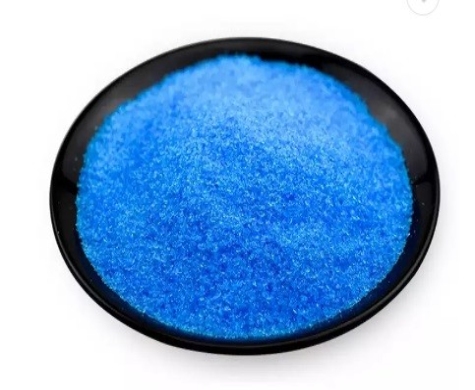

Appearence: | Blue Crystal | |
CAS No : | 7758-99-8 | |
Molecular Formula : | CuSO₄.5H₂O | |
Chemical Name : | Copper (II) Sulphate Pentahydrate | |
Density : | 2,284 g/cm³ | |
Purity : | % 98 | |
Copper (Cu) Content : | % 25 | |
Sulphur (S) Content : | % 12,8 | |
Melting Point : | 150 °C | |
Water Solubility : | 316 g/L (0 °C) | |
Storage Condition : | It should be stored in closed packaging in a cool, ventilated and moisture-free environment. | |
Solubility : | Soluble in water and methanol. | Insoluble in ethanol and acetone. |
Copper Sulphate Pentahydrate
Copper sulphate pentahydrate is a blue crystalline compound with the chemical formula CuSO₄·5H₂O. Containing approximately 25% copper (Cu), it is widely used in agricultural and industrial sectors. This highly soluble compound plays a critical role in fulfilling the copper requirements of plants, water treatment processes, and various industrial applications. Due to its antimicrobial and fungicidal properties, it is preferred for disease control in agricultural production.
Copper sulphate pentahydrate has a diverse range of uses, from agriculture to industry and water treatment. In agriculture, it is used for plant nutrition and to prevent fungal diseases. In industry, it is employed in various sectors such as metal coating, textile dyeing, and leather processing. Additionally, it is used to prevent algae formation in water treatment systems and as a nutritional supplement in livestock.
Chemical Properties and Technical Details
The chemical formula of copper sulphate pentahydrate is CuSO₄·5H₂O. This structure includes copper (Cu), sulfate (SO₄), and water molecules (H₂O), forming the compound’s crystalline structure. The molecular weight of copper sulphate pentahydrate is approximately 249.68 g/mol. It appears as distinct blue crystals and is hygroscopic in nature. It dissolves easily in water, forming a clear blue solution. Its solubility increases with temperature, and it is widely applicable due to its chemical stability.
Physical properties include:
Color: Blue crystals
Solubility: 100 g/L in water at 20°C
Melting Point: 110°C (where it begins to convert to the anhydrous form)
Copper sulphate pentahydrate is a slightly acidic compound, with a pH range of 3.5-4.5. Upon dissolution in an acidic environment, sulfate ions are released, and copper ions are introduced into the soil or water. It can also react with alkaline substances to form precipitates. Notable chemical reactions include:
Reaction with alkaline compounds to form copper hydroxide precipitate.
Dehydration under excessive heat, resulting in the anhydrous copper sulphate form.
It plays an effective role in water treatment processes by removing water hardness and combating microorganisms.
What Does Copper Sulphate Do?
Copper sulphate is essential for preventing plant diseases in agriculture and addressing copper deficiencies in soil. Copper, an essential micronutrient for plants, supports enzyme activities and chlorophyll synthesis. It acts as a fungicide, protecting plants from fungal and bacterial infections. This is particularly useful in viticulture, citrus cultivation, and vegetable production, where copper sulphate solutions prevent fungal diseases. In addition, when soil copper levels are low, copper sulphate is used as a fertilizer to promote plant growth.
Industrial Uses
Copper sulphate is widely used in various industries:
Leather Processing: Increases the protective properties of leather and prevents fungus formation.
Water Treatment: Used to prevent algae and bacteria growth in water treatment plants.
Pigment and Paint Production: Copper compounds provide blue tones in ceramics and textile dyes.
Metal Processing: Used for surface cleaning due to its abrasive properties.
Chemical Industry
In laboratories, copper sulphate is used as a reagent for detecting the presence of various ions in chemical analyses. It is also employed in educational settings to observe chemical reactions. Additionally, it is included in some antiseptic formulas and wood preservation solutions.
Benefits of Copper Sulphate
The main benefits of copper sulphate include:
Disease Prevention: Protects plant health by controlling fungal and bacterial diseases.
Supports Photosynthesis: Enhances chlorophyll production, strengthening the green parts of plants.
Address Copper Deficiency: Improves root and stem development by addressing copper deficiency in the soil.
Improves Product Quality: Supports healthier fruit and vegetable development, enhancing quality.
Extended Shelf Life: Reduces the risk of diseases during storage, extending the shelf life of produce.
Increased Yield: Foliar applications show a quick effect, increasing crop yield.
Water Quality: Prevents algae formation in water treatment plants, improving water quality.
Leather Durability: Enhances the durability and quality of leather.
Stable Pigments: Contributes to durable and stable color in pigment and paint production.
Hazards and Safety Information
Improper or excessive use of copper sulphate can pose risks to both human health and the environment. High concentrations may accumulate in soil, damaging plant roots and disturbing the microbial balance. Inhalation or prolonged skin contact can lead to irritation, burning eyes, and digestive system disturbances. It can harm the aquatic ecosystem if it contaminates water resources.
Copper sulphate should be stored in cool, dry, and well-ventilated areas. It should be kept in sealed containers, away from sunlight, moisture, and air. When handling the compound, personal protective equipment such as gloves, goggles, and masks should be worn, and applications should be made in windless, sheltered areas. After use, wash hands and face thoroughly with water.
Usage of Copper Sulphate in Agriculture
Copper sulphate is typically used as a 0.2-0.5% solution in agricultural applications. For foliar treatments, it is diluted with water and applied as a spray. For soil applications, it can be integrated into irrigation systems. Proper dosage is critical to avoid toxicity in plants and to ensure effective results.
It is particularly effective in vineyards, olive orchards, citrus groves, and vegetable gardens, which are prone to fungal diseases. Copper sulphate is typically applied in the spring to prevent disease outbreaks, with applications before flowering and during fruit development stages reducing disease risks and boosting productivity.
Is Copper Sulphate Harmful to Health?
Direct skin contact and inhalation should be avoided when using copper sulphate. Protective clothing, goggles, and masks should be worn to protect the skin and respiratory system. Children and animals should be kept away from treated areas.
In case of accidental overdose, the affected area should be immediately rinsed with plenty of water, and medical attention should be sought. Symptoms such as nausea, vomiting, and dizziness may occur if swallowed, requiring immediate medical consultation.
Obafer Kimya’s Commitment to Quality
At Obafer Kimya, we ensure that our copper sulphate pentahydrate products meet the highest quality standards, prioritizing customer satisfaction. We offer reliable copper sulphate solutions with certified products and analysis reports to meet your agricultural and industrial needs. Contact us for detailed information and take advantage of our competitive wholesale prices!


