

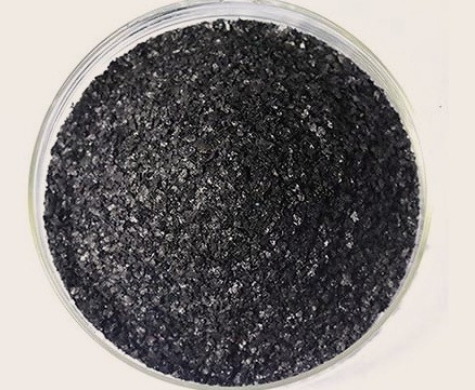

Appearance: | Black Solid Flake |
Alginic Acid: | % 2 |
Organic Matter: | % 35 |
Total Nitrogen: | % 0,5 |
P2O5: | % 3 |
K2O: | % 20 |
Amino Acid: | % 3 |
Microelements (Fe,Zn,Mo,B): | % 0,25 |
pH (1%): | 8-11 |
Water Solubility (20 °) : | 185 gr / Litre |
Seaweed: A Natural Source of Nutrients
Naturally growing in oceans and seas, seaweed is a highly nutritious plant. It contains alginate acid (16%), organic matter (35%), total nitrogen (0.5%), P₂O₅ (3%), and K₂O (20%), along with amino acids (3%) and essential microelements such as Fe, Zn, Mo, and B. These valuable nutrients make seaweed a highly beneficial resource in both agricultural and industrial applications.
The pH value of seaweed ranges between 8-11 in a 1% solution, and it stands out with its high solubility in water (185 g/L at 20°C). Naturally occurring polymeric compounds, polysaccharides, and plant hormones act as a protective shield for plants against environmental stress factors.
Natural Properties and Uses of Seaweed
Seaweed, rich in bioactive compounds, is widely used across multiple industries, including:
- Supporting plant growth, improving fruit and flower development, increasing leaf expansion, and enhancing resistance to environmental stressors. It stimulates root and shoot growth while promoting cell division for larger fruit sizes.
- Cosmetics, pharmaceuticals, and food industries: Due to its high alginate acid and polysaccharide content, seaweed is commonly used in skincare products to support skin renewal and hydration.
- Protecting plants from environmental toxins: Its natural antitoxin properties provide protection against bacteria and viruses, supporting organic and sustainable farming practices.
Advantages of Seaweed
Seaweed, with its eco-friendly properties, provides significant advantages over chemical fertilizers. Chemical fertilizers often lead to toxic buildup, deteriorating soil structure over time, whereas seaweed’s natural composition ensures sustainability.
With its rich mineral, vitamin, and micronutrient content, seaweed provides essential nutrients such as potassium, calcium, nitrogen, and trace elements, fostering healthy plant growth and improving crop quality.
Seaweed is available in liquid, powder, and granule forms, providing flexibility in agricultural applications:
- Liquid Seaweed: Rapid absorption when applied as a foliar spray.
- Powdered Seaweed: Easily integrated into irrigation systems.
- Granular Seaweed: Provides long-lasting nutrient release when mixed with soil.
Its adaptability allows seaweed to be used across a wide range of crops, from field crops to fruit and vegetable production. Its compatibility with modern agricultural technology further enhances its efficiency.
Types of Seaweed
Seaweed is available in different forms to meet specific agricultural needs:
- Liquid Seaweed: Ideal for foliar application due to its high absorption capacity.
- Powdered Seaweed: Convenient for use in irrigation systems.
- Granular Seaweed: Provides long-term soil enrichment when incorporated into the soil.
Ecological and Economic Contributions of Seaweed
Seaweed plays a crucial role in sustainable agriculture and environmental conservation projects. Its organic compounds, minerals, and bioactive components actively improve soil health, enhancing organic matter levels and water retention capacity. This is particularly beneficial in drought-prone regions, where seaweed can increase soil resilience.
By reducing carbon emissions, seaweed supports environmental sustainability goals. Unlike chemical fertilizers, which contribute to carbon pollution during production and application, seaweed is a natural alternative that minimizes environmental harm. Using seaweed-based fertilizers instead of synthetic chemicals reduces energy consumption and mitigates the negative effects of industrial agriculture, making it a valuable solution for combating climate change.
For eco-conscious farmers, seaweed not only enhances crop production but also promotes environmentally friendly agricultural practices. As a renewable and natural resource, it remains a cornerstone of sustainable farming, offering economic and environmental advantages that continue to shape the future of agriculture.
Seaweed Application Guidelines
To maximize the benefits of seaweed, application should be tailored to plant type, method, and specific growth requirements. It can be applied both as a foliar spray and soil treatment, offering flexibility for different farming practices.
Foliar Application:
- Ensures rapid absorption when sprayed onto leaves, helping plants recover quickly.
- A 0.5-1% solution is commonly used for foliar applications.
- Even distribution over the plant’s leaves ensures optimal absorption.
- This method is most effective during active growth stages.
Soil Application:
- When incorporated into soil, granular seaweed releases nutrients gradually, promoting strong root development.
- 5-10 kg per hectare is recommended for soil applications.
- It is best applied before flowering and fruiting to optimize plant growth.
Irrigation-Based Application:
- Seaweed can be integrated into drip or sprinkler irrigation systems, ensuring uniform nutrient distribution to plant roots.
- Application guidelines:
- Pre-flowering foliar application enhances productivity.
- Post-flowering stages benefit most from seaweed treatments.
- Applications every two weeks are recommended but can be adjusted based on plant needs.
- Early morning or late evening applications are ideal to prevent evaporation.
Before mixing seaweed with other fertilizers, compatibility tests should be conducted to prevent unwanted chemical reactions. Excessive use may lead to salt buildup in plants, so adhering to dosage guidelines is essential.
Additionally, soil should be moist before application to improve nutrient absorption. Applying seaweed to dry soil can hinder its penetration, while windy conditions should be avoided to prevent drift loss.
By following these application best practices, farmers can maximize the benefits of seaweed while maintaining sustainable and efficient agricultural production.
Seaweed and Obafer Assurance
If you are looking for high-quality seaweed products tailored to your agricultural needs, Obafer is your trusted partner. Our seaweed-based solutions are designed to enhance productivity and support sustainable farming practices.
For more information, contact us today!


