

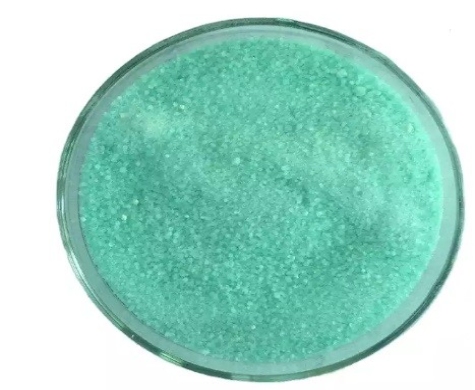

Appearence : | Green Crystal Powder |
CAS No : | 7782-63-0 |
Molecular Formula : | FeSO₄.7H₂O |
Chemical Name : | Ferrous (II) Sulfate Heptahydrate |
Purity : | % 99 |
Density : | 1,895 g/cm³ |
Ferrous (Fe) Content : | % 19 |
Sulphur (S) Content: | % 11,5-12 |
Boiling Point : | 330 °C |
Melting Point : | 64 °C |
Water Solubility : | 29,51 g/100 ml (25 °C) 51,35 g/100 mL (54 °C) |
Storage Condition : | It should be stored in closed packaging in a cool, ventilated and moisture-free environment. |
Solubility : | Soluble in water and methanol. |
Ferrous Sulphate Heptahydrate
Ferrous sulphate heptahydrate is a compound composed of iron and sulphate ions, with the chemical formula FeSO₄·7H₂O. It forms through the crystallization of each ferrous sulphate molecule bound to seven water molecules. The compound typically appears as greenish-blue crystals and is highly soluble in water. It has a broad range of applications in agriculture, industry, and chemistry. In agriculture, it is widely used as a fertilizer to address iron deficiency in plants, while its pH-regulating and fertility-enhancing properties make it ideal for use in acidic soils. In industry, it plays a vital role in iron coating and pigment production.
The chemical structure of ferrous sulphate heptahydrate consists of a stable crystalline form, where one iron (Fe) ion and one sulphate (SO₄) ion are each surrounded by seven water molecules. This structure significantly influences the compound’s physical and chemical properties. With a molecular weight of about 278.02 g/mol, the heptahydrate form is known for its high solubility and reactivity. It maintains stability, especially in humid environments, and ensures easy solubility during applications. In agricultural use, it effectively meets the iron requirements of plants quickly. Moreover, its stability and portability make it a preferred choice for commercial applications.
Chemical Properties of Ferrous Sulphate
The chemical formula of ferrous sulphate is FeSO₄, expressed as FeSO₄·7H₂O in the heptahydrate form. The molecular weight is approximately 151.91 g/mol in the anhydrous form and 278.02 g/mol in the heptahydrate form. This compound, which consists of iron and sulphate ions, is widely preferred for agricultural and industrial applications.
Ferrous sulphate heptahydrate forms greenish-blue crystals that are easily soluble in water. Its solubility increases with temperature, allowing the preparation of effective fertiliser solutions in agricultural applications. Due to its hygroscopic nature in solid form, it should be stored in dry, cool environments. When dissolved in water, ferrous sulphate forms a slightly acidic solution, with a pH typically ranging between 3-4. This property is advantageous in agricultural applications for stabilizing soil pH. Its high solubility ensures it is highly effective in addressing iron deficiencies in plants.
Uses of Ferrous Sulphate
Agriculture
Ferrous sulphate is a critical source of micronutrients in plant nutrition. It quickly corrects chlorosis (yellowing) caused by iron deficiency in plants and supports healthy photosynthesis. Additionally, it increases the fertility of acidic soils by lowering the soil pH level. Ferrous sulphate, applied via soil or foliar methods, enhances productivity, particularly in crops such as citrus fruits, vegetables, and grapes. Dosage recommendations vary according to plant type for optimal results.Water Treatment
Ferrous sulphate is utilized in water treatment plants to remove phosphates and purify water. By reacting with metal ions, it helps maintain the chemical balance of water and reduces turbidity, which is especially important in wastewater treatment. In pigment production, ferrous sulphate is used in creating iron-based dyes and other colored compounds. It also acts as a reaction accelerator and pH regulator in the chemical industry, further increasing its industrial value.Chemistry
Ferrous sulphate is commonly used in chemistry laboratories for educational and research purposes. It is favored for demonstrating various chemical reactions and pH regulation experiments. This versatility makes it an ideal compound for scientific studies, particularly in educational institutions.
Iron Sulphate Fertilizers
Ferrous sulphate fertilizer is an effective micronutrient source used to address iron deficiencies in plants and regulate soil pH. This fertilizer, which can be applied both foliar and in the soil, supports healthy plant growth and effectively resolves issues like chlorosis. For foliar applications, a 0.5-1% solution is generally prepared and sprayed onto plants, while for soil applications, 20-40 kg per hectare is recommended.
The frequency of application should be adjusted based on the plant species and growth period. Ferrous sulphate fertilizer is particularly beneficial for plants with high iron requirements, such as citrus fruits, grapes, and vegetables. By applying the correct dosage and methods, this fertilizer contributes to plant health and soil fertility.
Ferrous sulphate fertilizer not only corrects iron deficiencies but also enhances plant resilience, making them more resistant to stress. It is especially effective in alkaline and calcareous soils, where it helps regulate the chemical balance and improves nutrient uptake. Additionally, it can be combined with other fertilizers for more tailored solutions in agricultural practices. Before application, soil analysis should determine the correct amount and method, and fertilization should be done in the early morning or evening for optimal results.
Benefits and Risks of Iron Sulphate
Ferrous sulphate plays a vital role in photosynthesis by providing the necessary iron for healthy plant growth. It helps eliminate the yellowing (chlorosis) caused by iron deficiency by promoting chlorophyll production. Furthermore, it increases productivity in alkaline soils by lowering the pH and providing acidic properties. When applied correctly, ferrous sulphate improves both crop quality and soil health.
However, excessive or improper use of ferrous sulphate can have detrimental effects on plants and soil. High doses may cause burns on plant roots and toxic effects in the soil. Moreover, overuse can disrupt the mineral balance of the soil, leading to reduced yields. To minimize risks, it is essential to follow correct dosage, application timing, and instructions. Care should also be taken to prevent the fertilizer from contaminating water resources, and it should be stored in safe conditions.
Storage and Purchase of Ferrous Sulphate
Due to its hygroscopic nature, ferrous sulphate can deteriorate in humid conditions. Therefore, it is important to store the product in dry, cool, and airtight containers. Proper storage conditions preserve the chemical stability of the product, ensuring it remains effective. Ferrous sulphate has a long shelf life when stored correctly. Additionally, it is important to keep storage areas secure from children and animals to ensure safety.
Ferrous Sulphate Heptahydrate and Obafer Assurance
At Obafer, we offer high-purity, specially manufactured ferrous sulphate heptahydrate solutions to enhance agricultural productivity. Our products are produced and rigorously analyzed in accordance with international quality standards. We provide reliable solutions for agriculture, water treatment, and industrial applications, offering flexible options for both individual and large-scale producers.
Contact us to purchase ferrous sulphate heptahydrate, with reliable supply, competitive prices, and technical support advantages!


